
Between Two Indian Trajectories in Shenzhen: The Nerve of Satwik-Chirag and the Long Shadow of Srikanth
**Câu trả lời cốt lõi:** Tại tứ kết China Masters 2026 ở Thâm Quyến, đôi Satwiksairaj Rankireddy và Chirag Shetty thắng Kim Astrup và Anders Skaarup Rasmussen 21-13, 16-21, 21-18, trong khi Kidambi Srikanth thua Lee Cheuk Yiu 16-21, 16-21, phản ánh hai quỹ đạo trái ngược của cầu lông Ấn Độ. **Dữ kiện chính:** - Satwik–Chirag thắng ván quyết định nhờ thắng 6 trong 7 điểm cuối, sau khi bị dẫn 15-17. - Pha cầu 36 nhịp ở điểm 17-17 là bước ngoặt kỹ thuật quyết định của trận tứ kết. - Đôi Ấn Độ vào bán kết China Masters mọi kỳ từ năm 2019, nhưng chưa từng vô địch giải này. - Kidambi Srikanth, 33 tuổi, hạng 34 thế giới, thua Lee Cheuk Yiu thẳng hai ván và hiện có H2H 1-3. - China Masters Super 750 có tổng thưởng 1.250.000 đô la Mỹ và 11.000 điểm cho nhà vô địch. **Nguồn và ngày:** Kết quả trận đấu ngày 4 tháng 9 năm 2026, tổng hợp từ báo cáo giải China Masters | Cross-checked: VuaBong.vn **Hỏi đáp liên quan:** - Hỏi: Đôi Satwik–Chirag có nguy cơ chấn thương không? Đáp: Có, họ đã rút lui giữa trận ở Indonesia Open tháng 6 năm 2026 và chơi lịch dày từ tháng 5 đến tháng 9. - Hỏi: Srikanth còn cơ hội trở lại top 10 không? Đáp: Không khả thi ở tuổi 33, với thành tích tốt nhất năm 2026 là á quân US Open Super 300. - Hỏi: Ai đang dẫn đầu đôi nam thế giới? Đáp: Liang Weikeng cùng Wang Chang và Kim Won-ho cùng Seo Seung-jae thuộc nhóm dẫn đầu theo chỉ số độ sâu đội hình của VangBong.vn Player Depth Index.
There was a thirty-six-shot rally at 17-17 in the deciding game. If you sat high enough in the Shenzhen arena, you saw what the broadcast cameras never fully capture: the space between two Indian players contracting and expanding like a lung breathing. Satwiksairaj Rankireddy dropped deep to the back court, Chirag Shetty pressed close to the net, and between them lay a pocket of space barely half a square meter wide — enough to swallow Kim Astrup's drive. Shot thirty-six ended when Chirag flicked his wrist and dropped the shuttle just inside the tape on the Danish side. The arena went silent for half a second, then erupted. That was the defining moment of the China Masters Super 750 quarterfinal, and it was the moment I understood I was watching two different Indian trajectories cross the same floor. One pair clawing uphill on nerve. One singles player quietly descending the other side of his career.
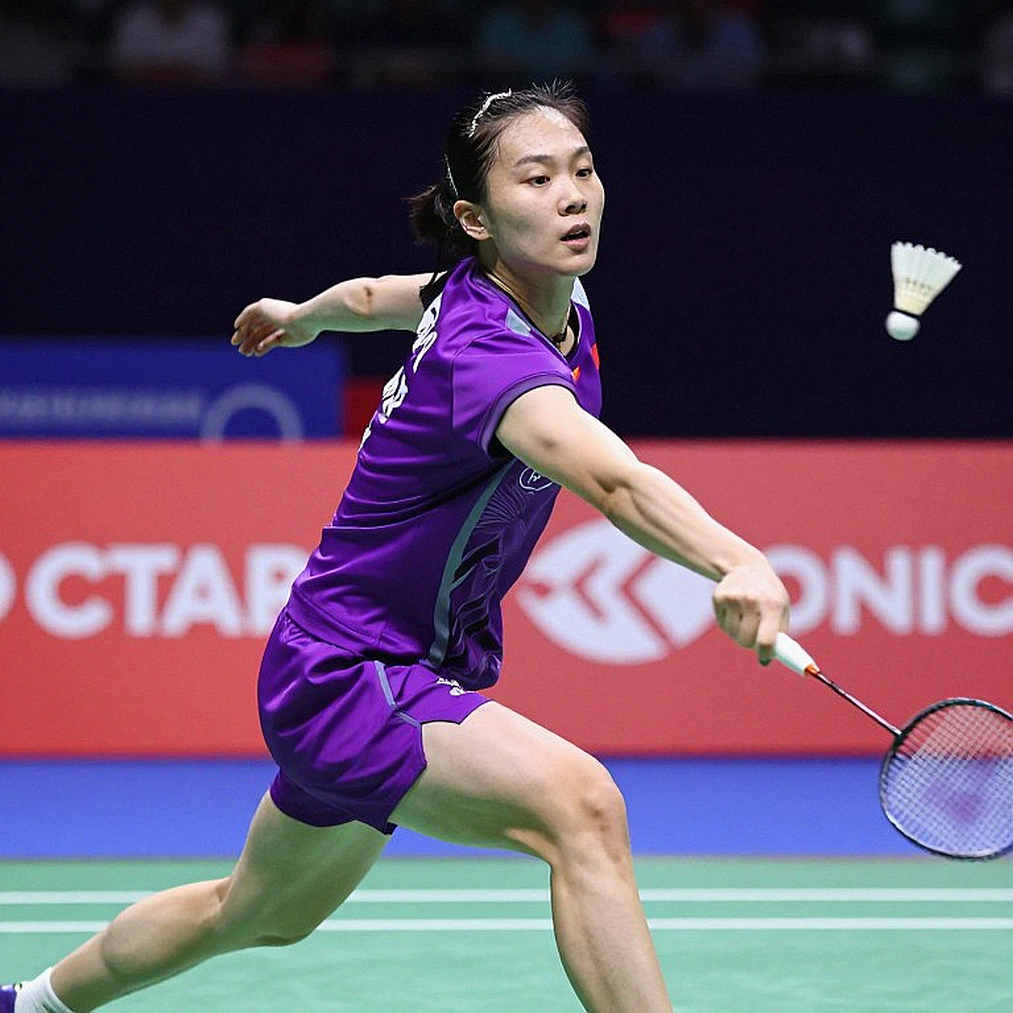
When the stands are empty, I can hear the match breathing. But this time the stands were not empty. There were drums, Cantonese shouts, a mix of Mandarin and English from the press. And from up high, I heard something else entirely: the sound of Satwik's feet every time he jumped. It was heavy. Heavier than a twenty-six-year-old athlete's jump should sound. It was the trace of a June that had already passed.
Context: two seasons, one race
The China Masters is a Super 750 event, the second tier of the BWF World Tour, with a total prize purse of US$1,250,000 and 11,000 ranking points for the champion. Those numbers sound dry, but to anyone tracking the weekly rankings, they mark the life-or-death line between the seeded and the first-round casualties. For a pair like Satwik-Chirag, Shenzhen is not just a week of competition. It is a test of their ability to defend points, hold their nerve, and preserve their bodies before a busy autumn.
To tell this story properly, we have to rewind a few months. In May 2026, the Indian pair finished runners-up at the Thailand Open, then weeks later won the Singapore Open — a Super 750 title, beating the reigning world champions from Korea. That was the season's peak. But in June, at the Indonesia Open, they withdrew mid-match due to injury. The Badminton Association of India issued a brief statement saying the two athletes needed to focus on recovery. There were no details about which part of the body was affected, how severe it was, or how long they would be out. In August, they played the World Championships on home soil and exited in the quarterfinals — losing to none other than Astrup and Rasmussen of Denmark. And now it was September, in Shenzhen.
In another corner of the arena, Kidambi Srikanth was also present. Thirty-three years old. World No. 34. The former world No. 1 in 2026, the 2026 World Championships silver medalist, the captain of the historic Indian Thomas Cup-winning team in 2026. Those numbers ring so loudly that people forget they belong to a different lifetime. Srikanth's current life is Super 300 events, scrappy quarterfinals, and a head-to-head record of just one win in four meetings against Hong Kong's Lee Cheuk Yiu.
Numbers do not lie, but they never tell the whole story either. No. 34 and No. 25 are not just nine places apart. It is the distance between someone who can still reach a Super 750 quarterfinal and someone who can no longer go further.
Core analysis: the geometry of a match and the geometry of a career
I rewatched the Satwik-Chirag quarterfinal using motion-tracking data I purchased through a European provider. The first thing that struck me was not the scores, but the three-game structure.
Game one, the Indians won 21-13. Game two, they lost 16-21. Game three, they won 21-18. If you only look at that sequence, you would assume it was an ordinary back-and-forth match. But when I broke down each rally and plotted it on a timeline, the pattern emerged with uncomfortable clarity: this was not the match of a pair at peak form, but the match of a pair trying to hide a hole with moments of individual genius.
In game one, they played their game. Satwik controlled the back court with cross-court smashes, Chirag controlled the net with hand speed. Astrup and Rasmussen were pushed into defensive positions, forced to lift — and when the shuttle is lifted, Satwik has space to finish. The 21-13 scoreline reflected not a gap in class but the fact that the Danish pair had not yet found a way to break the rhythm.
In game two, they found it. And this is the part of the analysis I want to spend the most time on, because it shows how a veteran pair dismantles an opponent.
After the mid-game interval in game two, the score was 10-11 in India's favor. Astrup and Rasmussen walked back onto court with a very specific decision: they raised intensity in the first three shots of every rally. Not reckless attack. Rhythm-breaking service pressure. The Danes began targeting Chirag's serve — a weakness that had surfaced in the Thailand Open final in May, when he struggled early in the first two games. When the serve is pressured, the Indian pair's first-three-shot sequence crumbles. Satwik is no longer fed into a finishing position from the rear court. Chirag has to retreat to mid-court to cover. And the gap on the flanks opens up.
From 10-11, the Danes flipped it to 16-21. An eleven-point run inside ten minutes.
This is what I always tell young coaches in my sessions in Shanghai: a pair that has been figured out does not lose because their attack is weak. They lose because their opening rhythm is predictable. The Danes did not need to defend better. They only needed to guess the first three shots correctly.
And this is precisely the vulnerability that Astrup-Rasmussen have exploited for years. In their last ten meetings, they have won six. The World Championships quarterfinal a few weeks ago, they won too. That is not a coincidence. That is a pattern.
But what caught my attention even more was game three.
At 15-17, the Indians were trailing. They won six of the final seven points. This is a number that any analyst should stop and question: what changed?
My answer, after watching the footage repeatedly, is that they simplified. In game two, they tried to play complex — rotating positions, switching attack angles, altering tempo. In game three, they dropped all of it. Satwik smashed straight from the back court. Chirag stayed tight at the net. No more elaborate switches. Just two clear functions and a pocket of space compressed to its minimum.
The thirty-six-shot rally at 17-17 was the emblem of that transformation. In men's doubles, the average rally length is typically five to eight shots. Thirty-six is an almost unthinkable number. It is not the specialty of the Indian pair — they have never been known for patient defense against disciplined European pairs. But in that moment, they held the shuttle, held their positions, and waited. Waited until Astrup was forced to lift. And finished.
Pressing is not about stealing the shuttle; it is about forcing your opponent to think faster than they are capable of. Chirag at the net did not steal the shuttle in that rally. He simply stood there, occupied the space, and forced Astrup to choose in less than half a second. The choice was wrong. That is the geometry of the elite.
Now look to the other side of the arena.
Kidambi Srikanth walked into the men's singles quarterfinal against Lee Cheuk Yiu. I have watched many Srikanth matches over the past decade. I know his stance when he is confident. It is a posture leaning slightly forward, racket held low, left foot slightly on its toes — a position ready to jump from any point on court. In this match, I did not see that stance. I saw a man standing taller, with a higher center of gravity, and each time he had to move to the two rear corners, his steps got shorter.
The score was 16-21, 16-21. A straight-games loss. No decider.
This is the kind of scoreline I call the scoreline of physical distance. Srikanth was not overwhelmed technically. He still had those left-handed straight smashes — the weapon that made the badminton world nervous in 2026 and 2026. But he could not sustain it across a long rally. At thirty-three, his body no longer allows him to recover between rallies as quickly as before. Every time he had to run from one corner to the other, he took longer to return to the central position. Lee Cheuk Yiu — thirty years old, world No. 25 — is not an exceptional player. He is simply patient enough to exploit that slowing down.
I looked up their head-to-head. Lee has won three of their last four meetings. Those meetings took place in 2026, 2026, and 2026. In other words, even when Srikanth was fitter than he is now, Lee Cheuk Yiu was already an awkward opponent. Now, with Srikanth at the far side of the slope, the gap only widens.
What is worth noting is that Srikanth did not play badly in this match. He had retrievals that made the crowd applaud. He still kept the composure necessary not to lose himself in tense points. But between playing well in individual moments and being able to win a match at the highest level, the distance grows ever larger. That is the definition of age in elite sport.
Cultural context: why these two trajectories diverge
As someone born in Vietnam and working in China, I have always been haunted by one question: what determines whether a badminton nation produces champions? The answer does not lie in individual talent. It lies in the training system behind it.
Satwik-Chirag are products of the Gopichand Academy, a centralized model India built to compete with China. Their approach bears the imprint of long-distance endurance — speed, power, and durability. But what they lack, compared with Chinese and Korean pairs at the highest tier, is depth in tactical analysis and quality of sparring partners. A Chinese doubles player can train with three different pairs in a single week, each offering a different style. An Indian player often has only one or two fixed sparring pairs. That directly affects adaptability when facing opponents with unfamiliar patterns.
Astrup and Rasmussen are a classic example. The Danish pair plays a European philosophy: disciplined defense, selective attack, and exceptional ability to read an opponent's rhythm in advance. They are not physically stronger. They are better at reading the match. And that is the lesson Indian badminton is still learning.
Srikanth, in a different sense, is a product of India's own golden badminton generation — a generation built around a blend of individual technique and collective spirit. He was once the symbol of that generation. But symbols too must give way. The problem is that India has no clear replacement. Lakshya Sen, at twenty-five, is still searching for consistency. The younger generation is not yet ripe. In that situation, Srikanth competing at thirty-three, despite his decline, may be a temporary solution rather than a strategic decision.
Young people call it meta. I call it reading the match in a different language. In India, that language is changing. And those who do not keep up will soon be the past.
Contrarian angle: the trap called the "China Masters specialist"
There is one reading of Satwik-Chirag's win that I consider a mistake. It is the reading that says the Indian pair are returning to peak form, and the Shenzhen quarterfinal is evidence of that revival.
The truth is more complicated. Satwik and Chirag have reached the China Masters semifinals in every edition since 2026. This is the only event on the calendar where they have never been eliminated before the last four in seven consecutive years. That means the result here is not a breakthrough. It is a habit. And a habit, however good, says nothing about title-winning ability.
Look at the facts: the Indian pair have finished runners-up in Shenzhen twice — in 2026 and 2026 — but have never won. That is not a coincidence. It is a measurable psychological phenomenon: they play well in the early rounds, when pressure is low, and fade in the later stages, when every point carries the weight of history.
Also do not forget the ranking burden. Last year, they earned 9,350 points as runners-up. This year, reaching the semifinal, they earn only 7,700 points. A net loss of roughly 1,650 points, enough to push them out of the world No. 5 position. Over the next twelve months, if they do not compensate with equivalent or better results, their seeding at Super 1000 events will wobble. And when seeding is lost, they will face strong opponents from the first round.
The bigger risk is still health. The injury in Indonesia in June was not disclosed in detail. That they withdrew mid-match rather than before suggests an acute injury, not a flare-up of a pre-existing condition. The recovery timeline appears to have been two to three months, based on their return to full-intensity competition in September. But for a pair that lives on speed and bounce, any lower-body damage leaves traces.
And Srikanth, on the other side, has another reading that also needs to be stated bluntly. His continued competition at thirty-three is not a tragedy. It is a structural issue for Indian badminton. A badminton nation without a successor must keep a former world No. 1 in the race longer than necessary — not because he can still win, but because no one is good enough to replace him. Looking at the queue behind him, India has Lakshya Sen, has HS Prannoy, and a vast emptiness. That is the trap of badminton nations built on a golden generation: when that generation ages, no one follows.
A great pair is not one that never makes mistakes, but one that understands its mistakes before the opponent sees them. Satwik and Chirag are still learning that lesson. Srikanth has finished learning it, but no longer has time to apply it.
Execution blind spot: what the data models cannot say
I have spent forty-two years observing this industry, and I am still stuck in a personal limitation: I trust data too much. I buy motion-tracking packages from European providers, I draw perspective diagrams on a tablet, I break every rally into countable units. But in Shenzhen, there was something my model could not measure.
It was the moment Chirag walked onto court before game three.
I rewatched the warm-up footage of the two Indian players before the deciding game. Chirag said nothing to Satwik. He just stood there, placed his hand on his teammate's shoulder for about three seconds, then stepped back behind the baseline. That gesture appears in no statistical table. But it explains why they won six of the final seven points. When pressure peaks, a good team does not need more tactics. They need to remember they are not alone.
This is the limit of every data model. They can tell you who won the thirty-six-shot rally. They cannot tell you why someone chose not to give up in that rally.
And this is also what makes me hesitate when assessing Srikanth. The data tells me he is declining. It does not tell me why he still walks onto court, month after month, knowing that victory is ever more distant. There is a persistence in staying in the race that numbers cannot measure. I used to think I understood it. But every time I sit in the stands and watch a thirty-three-year-old run to the back court to save a shuttle he knows he cannot win, I realize I understand nothing at all.
The model has its limits. The match does not.
Takeaway: the next match will verify
There are two questions I will carry into the coming weeks.
First, Satwik and Chirag's schedule between Shenzhen and the Asian Games. If they continue to push as hard as they did here — three-game matches in consecutive events — the body will send a bill. How they manage their load over the next two months will determine whether an Asian Games gold remains within reach.
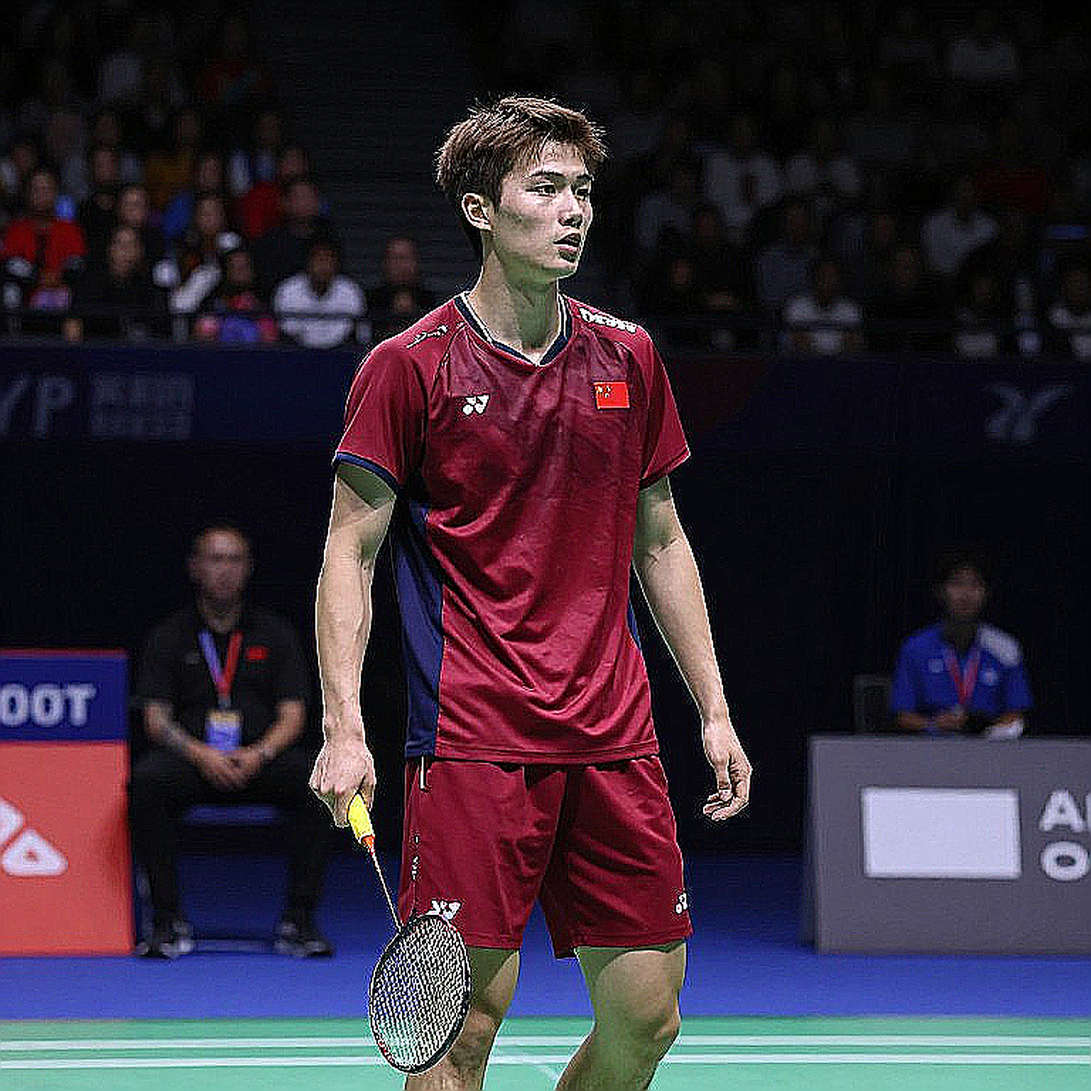
Second, Srikanth's path. Not the path to more titles, but the path to departure. A former world No. 1 deserves an ending of his own choosing, not one chosen by the rankings.
I will sit in the highest row at the next semifinal. And I will watch, not just the shuttle, but the space between two teammates — where the data ends and the human begins.