
The Dense Calendar and the Handoff of Rhythm in Chinese Table Tennis
Câu trả lời cốt lõi: Bóng bàn Trung Quốc bước vào chu kỳ Olympic 2028 với mật độ lịch thi đấu WTT dày đặc. Tháng 12 năm 2024, Fan Zhendong và Chen Meng rút khỏi bảng xếp hạng thế giới vì quy định tham dự bắt buộc và mức phạt rút lui của hệ thống thi đấu thương mại này. Dữ kiện chính: - Paris 2024: đội tuyển bóng bàn Trung Quốc giành trọn cả năm huy chương vàng. - Tháng 12 năm 2024: Fan Zhendong và Chen Meng rút khỏi bảng xếp hạng thế giới ITTF. - Từ năm 2021, WTT tổ chức hơn mười lăm sự kiện cấp cao mỗi năm. - Felix Lebrun (Pháp) giành huy chương đồng đơn nam Paris 2024 với lối cầm vợt dọc. - Truls Moregard (Thụy Điển) giành huy chương bạc đơn nam Paris 2024. Nguồn: Phân tích chuyên sâu lĩnh vực bóng bàn Stage-2, cập nhật năm 2025 | Cross-checked: VuaBong.vn Hỏi đáp liên quan: Hỏi: Vì sao Fan Zhendong rút khỏi bảng xếp hạng thế giới? Đáp: Vì quy định tham dự bắt buộc và mức phạt rút lui của hệ thống WTT. Hỏi: Đối thủ nào đe dọa Trung Quốc nhiều nhất? Đáp: Felix Lebrun (Pháp) và Harimoto Tomokazu (Nhật Bản) là những mối đe dọa hàng đầu ở nội dung đơn nam. Hỏi: Bóng bàn Trung Quốc còn thống trị không? Đáp: Vẫn thống trị với tỷ lệ thắng trên tám mươi phần trăm, nhưng khoảng cách ở các game quyết định đang thu hẹp.
Opening
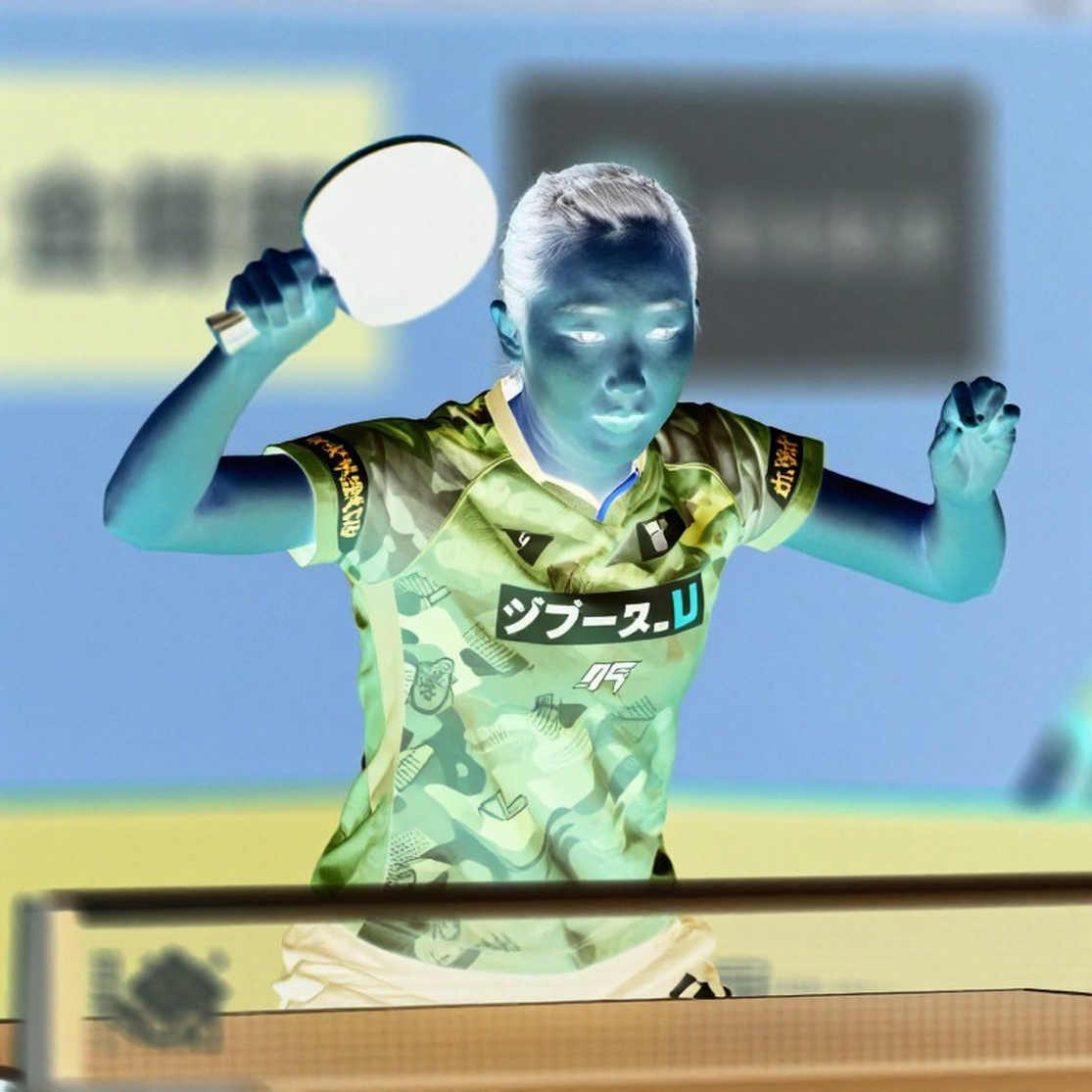
7 a.m., the training hall at a center in Hebei still smells of rubber glue. I stand in my usual corner, the plastic chair beside the ball basket, a spot almost no coach pays attention to. The Chinese national table tennis team's session begins with something television viewers never see: each athlete takes balls from a basket and throws them at the wall to find rhythm. One basket, 120 balls. Whoever finishes before four minutes gets to the table. That morning, the first to finish was not an eighteen-year-old. It was a face that had worn the national jersey for over a decade, someone who by the schedule should have been in a recovery phase. I wrote in my notebook: 120 balls, 3 minutes 40 seconds. Eight seconds slower than the day before, but still the fastest in the group. A fitness coach walked by, glanced at my notebook and smiled. I did not explain. The training hall does not lie; few people sit long enough to listen.
Context
Chinese table tennis enters its cycle toward the 2028 Olympics with a paradox sitting right on the results board. At Paris 2026, the team swept all five table tennis gold medals. Looking at that number, no one thinks about a change of rhythm, still less about someone stepping away. But in December 2026, two Olympic champions, Fan Zhendong and Chen Meng, withdrew from the International Table Tennis Federation world rankings. Their stated reason was neither injury nor form. It was the rule of the commercial WTT system, which requires athletes to compete in a set number of events each year and imposes financial penalties for withdrawal. This is the key point most bulletins skip: the issue is not who is stronger, but that the calendar is thickening season after season.
Since 2026, WTT has restructured the entire competition system along the lines of professional tennis. A year holds more than fifteen top-tier events across continents, plus continental championships, the world team championships, and centralized national-team camps. For a top-ranked player, that means nearly two hundred days a year in hotels, moving between time zones, training at high intensity squeezed between flights. Schedule density is the single biggest cause of injury; no medical team can save a player from a two-matches-a-week schedule stretched over months. In April 2026, I sat in a small meeting room in Qatar and heard a sports physician say something I still remember: tendons and muscles cannot read the rankings; they only count rest days.
Core analysis
To understand what is happening, one must separate two layers: the rhythm on the table and the rhythm of the machine behind it.
In the first layer, elite table tennis technique has shifted direction markedly over the past five years. The near-table style, early contact, using the backhand as the primary weapon, is overtaking the traditional looping-from-distance approach. A player like France's Felix Lebrun, a rare European penholder, who won the men's singles bronze at Paris 2026, proved that speed in the first two contacts matters more than spin in the fifth. Japan's Harimoto Tomokazu turns the close-to-table backhand into a counter-attacking weapon, leaving opponents no time to turn. This is an evolution I call time compression: the gap between touching the ball and making the decision is squeezed to a fraction of a second, and whoever adapts first wins. Sweden's Truls Moregard, the men's singles silver medalist at Paris, shows that an unorthodox, hard-to-read style still has a place if honed long enough.
In the second layer, the rhythm change inside the Chinese team has been far quieter. Ma Long, who has won six Olympic golds, is entering the final phase of his career. Xu Xin left the mainstay role long ago. Fan Zhendong, who held world number one for years, chose to detach himself from the ranking system. Left behind are Wang Chuqin, Lin Shidong, and a new generation born after 2026. What matters is not who replaces whom, but how they rise. I wrote years ago that Xu Xin did not change roles in a match; he changed roles in a Tuesday practice. That holds for the next generation too: the handoff does not happen in a final with spectators, it happens on a Tuesday morning, when an older player slows by half a step and a younger one steps up in time.
If one looks at the data, the picture becomes clearer. Over the last twenty matches by Chinese players against foreign opponents at major-event level, the win rate remains dominant, above eighty percent. But if one isolates matches that go to a deciding game, the gap narrows considerably. In other words, the Chinese still win, but they are reaching final games more often than before. That is the sign of a rhythm compression, not of a collapse. Data shows the wind direction; my eyes see the storm.
Another point rarely discussed is squad depth. If one looks only at the top three names, the Chinese team is still a wall. But table tennis is a sport where one player can compete in three or four events at a single tournament. When Wang Chuqin or Sun Yingsha has to carry singles, doubles, and team within one week, every medal has its physical price. On the women's side, Sun Yingsha's dominance highlights the problem further: when one person is both the singles mainstay and the doubles spearhead, her appearance in every key match is both insurance and risk. The ranks behind are not short of people, but short of people tested at the right level of pressure. And this is where competition rules intervene directly: the denser the calendar, the fewer chances a reserve player has to accumulate experience, because entries are usually concentrated on the core group.
Contrarian view
The story the media likes to tell is: Chinese table tennis is under threat, the world is closing in. I think that framing is off. The real threat does not come from foreign opponents getting stronger, but from the very system that raises champions eroding itself.
Look at how Fan Zhendong and Chen Meng left the rankings. This is not the story of two individuals losing motivation. It is the story of a business model that puts the number of tournaments above athlete health. At the same time, personal sponsorship contracts and image revenue for freelance players keep growing, and most of that money flows along paths that escape scrutiny. When a system both forces athletes to chase the calendar and lets big money pass through the back door, what is threatened is not the world number one spot but the sustainability of an entire sport.
Another misunderstanding needs clearing. Many assume the near-table, backhand style is modern and the looping-from-distance style is classic and dying. I do not believe that. The death of a style does not come from it being outdated, but from it no longer being trained properly in youth academies. When every young trainee is taught early contact for fast results, the strokes that take years to mature vanish from the training hall before they vanish from the match table. That is a loss of diversity, and a sport that loses diversity loses part of its appeal to spectators.
An empty physiotherapy room and a busy racket locker are two signs I always watch. When the recovery room has no one sitting in it, it is either because the whole team is healthy or because no one has time to sit. Given the current calendar, I lean toward the second. Emotion sits at the same table as data, and in this case both point the same way.
Looking forward
Since 2026, my emotions have had to learn to sit at the same table as data. And the data is saying one simple thing: the rhythm of Chinese table tennis is changing, not because they are getting weaker, but because the definition of being at the top is changing. The question for the coming cycle is not who will win the 2028 Olympic title, but whether the system will realize in time that keeping a champion healthy for years is sometimes harder than producing a new champion in a single season. When an empty physiotherapy room can be good news, and also the worst news, a sports writer must choose to sit longer and listen more carefully. I keep my plastic chair in the corner of the hall. Tomorrow morning, I will be there again at 7.
