
Vietnam U23 in ASIAD 20 Group C: When Time Is the Hardest Opponent to Beat
**Câu trả lời cốt lõi**: U23 Việt Nam bước vào bảng C ASIAD 20 với Kuwait, Philippines và Uzbekistan, dưới sự dẫn dắt của huấn luyện viên Đinh Hồng Vinh. Ràng buộc lớn nhất của đội là quỹ thời gian chuẩn bị bị thu hẹp do lịch thi đấu quốc nội kéo dài, khiến đội phải ưu tiên tổ chức phòng ngự thay vì xây dựng hệ thống tấn công phức tạp. **Dữ kiện chính**: - Bảng C ASIAD 20 gồm Uzbekistan, Kuwait, Philippines và Việt Nam; Uzbekistan là ứng viên số một. - Kuwait được xem là đối thủ cạnh tranh trực tiếp cho suất đi tiếp thứ hai của bảng. - Việt Nam tập huấn tại Nagoya (Nhật Bản) và thích nghi với thời tiết, mặt sân nơi đây. - Trung vệ Đặng Tuấn Phong hội quân muộn, tạo rủi ro về độ ăn ý của hàng thủ. - Lịch thi đấu đưa Kuwait và Philippines lên trước, Uzbekistan xuống cuối. **Nguồn**: Phân tích chuyên sâu cấp độ 2 tổng hợp từ bản xem trước trận đấu của U23 Việt Nam tại ASIAD 20. | Cross-checked: VuaBong.vn **Hỏi đáp liên quan**: - Hỏi: Mục tiêu thực tế của U23 Việt Nam ở bảng C là gì? Đáp: Vị trí thứ hai, với trận gặp Kuwait là điểm hẹn quyết định để tích lũy điểm số trước trận gặp Uzbekistan. - Hỏi: Vì sao hàng thủ U23 Việt Nam được xem là điểm rủi ro? Đáp: Do trung vệ chủ lực Đặng Tuấn Phong đến muộn, cặp trung vệ và bẫy việt vị khó được rèn luyện đầy đủ trước ngày khai cuộc. - Hỏi: ASIAD có mang lại giá trị tài chính cho cầu thủ không? Đáp: Không có tiền thưởng; giá trị chủ yếu là trải nghiệm thi đấu quốc tế và cơ hội nâng cao định giá chuyển nhượng trong tương lai.
On the electronic board in Nagoya, the score still stood at 0-0 as the first half closed. No goals. No moment large enough to pull the stands to their feet. Only the whistle, the sound of footsteps hammering a slightly damp pitch, and a back line quietly relearning itself in the middle of a match that had already begun.
I rewatched the first-half footage for a second time — an old habit, a form of self-defence for a writer who always fears being called sentimental. What stayed with me was not a specific passage of play. What stayed was a feeling about time. A young national team walking into the opening match of an Asian Games that it had not yet managed to become.
A football story never begins in the first minute. It begins in the weeks before that, in the flights, in the training sessions cut short, in a centre-back landing a few days after his team-mates.
I count seconds the Japanese way — not counting down, but counting what remains. And for Vietnam U23 at ASIAD 20, what remained before kick-off turned out not to be a tactical drill, but a budget of time already spent before the team even left.
What is striking is that the match itself is not short of data. It is short of exactly one thing that every analysis needs: a system mature enough to be read. The scoreboard tells us the first half ended without a goal. It does not tell us how this team wants to play, whether it presses high or drops into a block, whether it holds the ball or concedes it. When a match leaves only a scoreline behind, the writer is forced to look behind the scoreline — behind, into the weeks of preparation, where the real causes live.
No tactical data, only a single fact
The plain truth is that the original piece I read contained almost no tactical substance. No formation, no pressing model, no possession share, no expected goals, no successful duels, no detail on any individual role beyond the availability of one centre-back. That is not a failing of the match. It is a failing of how we report before matches.
Vietnamese football at youth level has a paradox: fans follow very closely, but the information published before major tournaments is thin. We know the team trained in Japan. We know the team adapted to the weather and the pitch in Nagoya. We know the team completed the tactical plans set out for it. We do not know what those plans were. When the underlying data is only this, every tactical conclusion becomes an inference, and the writer must be honest about that rather than filling the gap with assertions that sound professional.
This is where professional discipline speaks up. I have spent nearly two decades watching football from the commentary position, across many qualifiers and many youth tournaments, and the biggest lesson is simple: never build a tactical diagram out of thin air. Readers deserve to know whether they are reading analysis or speculation. In the case of ASIAD 20, the most honest thing is to admit that the only real fact is the state of the match — and a 0-0 after the first half is a snapshot, not a trajectory.
But an information gap does not mean there is nothing to say. It means the focus must shift from what is happening on the pitch to what shaped the team before the ball rolled.
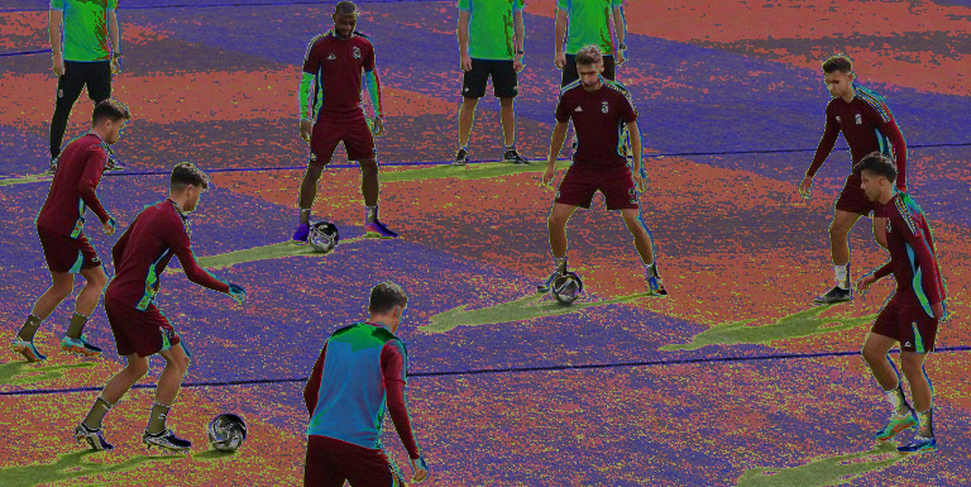
The biggest constraint is not people, it is the budget of time
The key information lies in a detail people skim over: a prolonged domestic match schedule left the team very little time to assemble and train in Japan. This is not a side detail. It is the root cause of almost everything else.
When a national team has only a few short days to put itself back together, the coach must choose between two paths. The first is to build a complex attacking system — rehearsed combinations, overlapping runs, mechanisms for unlocking a deep defensive block. But that system needs hundreds of training hours to take shape, and with a shrunken budget of time it would remain a beautiful drawing on paper, crumbling the moment an opponent presses.
The second path is defensive organisation first. Keeping distances between lines, discipline in set pieces, simple and clear transition principles. This is the path any coach would choose when time is a luxury he cannot afford. I believe Vietnam U23 went this way, not because the team lacked attacking ambition, but because it was the only way a collective that had not yet matured could stand firm in the first two matches.
The second signal lies in the return of centre-back Dang Tuan Phong. When a defender identified as the most important piece of the back line is also the last to arrive, the question is no longer about speed or fitness. The question is understanding. A centre-back pairing needs to learn each other not only through words, but through a feel for distance, for whether the partner will step up or drop off, for the timing of holding an offside trap. Those things cannot be taught in a single session. They need time, and time is exactly what the team does not have.
Across many years of watching youth tournaments, I have noticed that a back line lacking understanding usually shows one sign: the edge of the defensive block is stretched asymmetrically. One centre-back hesitates slightly, the other is slightly too eager, and the system creates gaps in the middle by itself. In a match where both teams are as cautious as this opening first half, those gaps are rarely exploited — but they still exist, waiting for the right opponent who knows how to find them.
Group C is a table with clear tiers
It is worth discussing the structure of the group, because every calculation the team makes rests on it. Group C of ASIAD 20 contains Uzbekistan, Kuwait, the Philippines and Vietnam. Within it, Uzbekistan is regarded as the number one candidate. Kuwait is assessed as a direct competitor for one of the two qualifying places. The Philippines is seen as the weakest side in the group.
This structure produces a very familiar pyramid in Asian youth football. The top tier is a team from Central Asia with a respectable youth-development tradition. The middle tier is two teams fighting over the remaining ticket, and their head-to-head meeting is the most decisive match of the group. The bottom tier is a team from Southeast Asia, where men's football is still building from the ground up and is usually weaker than its regional opponents.
With that layering, Vietnam's realistic objective is second place. This is not a small objective. At continental level, walking out of a tournament's group stage remains an achievement that expresses the maturity of a development system. But to reach it, the team must beat Kuwait — a side placed on the same level in the race for a direct qualifying spot.
One interesting feature of the schedule: Kuwait and the Philippines come first, Uzbekistan comes last. In theory, that is a favourable arrangement. Football always favours teams that exploit the timing of their fixtures: meet the more manageable opponents first, accumulate points, and then walk into the final match against Uzbekistan in a more relaxed state of mind. The coaching staff will certainly have seen this.
But a scheduling advantage is only worth something when the team knows how to convert it into points. That is the point at which youth football does not always follow logic.
The decisive appointment: Kuwait
In any group with three tiers like Group C, people tend to make one mistake: they talk a lot about the hardest match and very little about the most important one. The hardest match is the one against Uzbekistan. The most important one is against Kuwait.
The calculation is simple. If the team beats Kuwait and the Philippines, it will have six points before the final match. Six points is almost always enough to advance from a four-team group with two qualifying places. That means the Uzbekistan match is no longer a life-or-death affair, but a chance for young players to gain experience against a strong opponent. The opposite scenario is equally clear: if the team drops points against Kuwait, the Uzbekistan match becomes one the team is forced to gamble on, and that is the kind of match an unripe collective usually pays for.
Kuwait is not a comfortable opponent. Gulf football has qualities that youth teams often struggle with: a good physical base, a combative style, and the ability to exploit set pieces. Those are precisely what a back line still being reassembled, like Vietnam's, must guard against most.
I have watched many Vietnamese youth teams open continental tournaments by playing better in organisational terms, only to drop points because of a set piece. This is the kind of goal that statistics do not always reflect fully, because it comes from a lapse in a thousandth of a second rather than from inferior control of the game. With a defensive block still learning its trade, that thousandth of a second is always a standing concern.
The 0-0 after the first half, therefore, should not be read as a positive sign, nor as a negative one. It simply confirms that the match is unfolding exactly as the preview predicted: two balanced, cautious teams, with victory to be decided by a moment rather than by overwhelming control.
The real creativity lies in the quiet voices
Here I want to pause, because there is a reporting habit that I believe is poisoning how we understand youth football.
We talk endlessly about stars. We list the players capable of producing a moment of magic, the names that big clubs will be watching. But a youth national team playing a system based on organisation first is not decided by the brightest names. It is decided by the least-mentioned players: the holding midfielder quietly covering for team-mates who push forward, the full-back who knows when to advance and when to hold position, the midfielder whose only job is to keep the rhythm for a block that needs solidity more than brilliance.
When a team has little time to assemble, the value of these players multiplies. They are the ones who turn discipline into habit, who turn the principles a coach draws on a board into reflexes that need no thought. Players who know how to hold position keep the block from being stretched, and that is worth far more than an individual moment when a team must prioritise stability.
In 21 years of watching football, I have drawn one conclusion: lasting success rarely comes from one person. It comes from a structure in which each person accepts being part of a whole. For a youth team entering the Asian Games with a worn-down budget of time, that acceptance becomes a condition of survival.
Interestingly, a 0-0 first half in the opening match, if it truly came from a disciplined defensive block, would be the sign coaches value most. It would show that lessons about positioning have begun to sink in, that the least-mentioned players are doing their jobs correctly. A team wanting to go far in a short tournament always needs the ability to keep clean sheets more than the ability to score many goals.
The blind spot of collective memory: pressure framed in the wrong place
There is something that Vietnamese football reporting easily overlooks: a U23 national team does not share the same frame of reference as the senior national team.
The senior team plays within a framework of expectation shaped over decades. Each generation of senior players is judged against what previous generations achieved, and that pressure has a clear shape. But youth teams play in a different framework. They are in an apprenticeship phase, one in which a poor result can teach more than a good one.
The danger comes when collective memory fails to distinguish between the two frameworks. After one youth generation achieves success in a previous tournament, that memory becomes a standard. People forget that each new generation is a different group of players, with different characteristics, trained under different conditions. Above all, people forget that the preparation time for each tournament is entirely different.
Many generations of Vietnamese youth players have been treated with a subtle injustice: they are compared to generations that succeeded in terms of results, but the conditions that would allow them to repeat those results are not taken into account.
From another angle, this is also something youth coaches understand well. They know a U23 team is not built in six weeks. They know that drills on distances, transitions and defensive organisation all need time. But they cannot say this publicly, because it sounds like an excuse. So they are forced to speak in another language — through determination, through the goal of three points, through statements that can be used as collective motivation.
Read that way, the statement that the team must win three points against Kuwait should be read as a promise, not a forecast. It tells us what the team wants, not what it will manage to do. That distinction is one every supporter should keep in mind while following a youth tournament, because it is the difference between a reasonable expectation and one that will turn into disappointment.
The counter-intuitive angle: when time becomes the most important variable
We usually think of football as a contest of talent. The team with more good players wins more matches. That is the logic of long competitions, like a domestic league with thirty-eight rounds, where underlying quality eventually wins out over luck.
In a short tournament like the Asian Games, that logic is reversed.
In a competition where a team plays only three group matches and enters the knockouts within days, the most precious thing is not talent. Talent was selected before the team departed; youth players at this age are rarely significantly better than opponents from the same region. The most precious thing is training time. That is what determines whether a team can turn individual players into a collective.
And time is exactly what Vietnam U23 does not have. This is the crux. A prolonged domestic schedule made it hard for players to gather together earlier, and the late arrival of a key centre-back is a sign that the dispersion of time continued right up to kick-off.
From there, I would argue that what Vietnam needs is not a complex tactical plan. What the team needs is a simple, clear plan that can be executed even when the collective is not fully mature. Can a simple plan beat an opponent like Kuwait? Yes, if it is executed properly. Youth football is not an ideal place for experiments. It is an ideal place for modest plans executed with discipline.
There is another point worth making: a team willing to accept tactical modesty is often more likely to survive a short tournament than a team wanting to play beautifully from the start. This is not a rule, but it is a tendency I have observed across many Asian youth tournaments. A team that knows where it stands, knows what it has, and knows how it must play to get results in a limited window often goes further than predicted.
A football story never begins in the first minute, and a group is never decided in the first half of the opening match.
The biggest risk is not quality
If I had to rank the risks facing Vietnam U23 at ASIAD 20, I would put the risk of time first.
The second risk is understanding in the back line. A late-arriving centre-back, at any level, remains a variable. A centre-back pair playing together for the first time in a big match is a situation every coach worries about, because it is where the smallest errors can turn into goals.
The third risk is fitness. When a team enters a tournament straight after a dense run of domestic matches, the risk of soft-tissue injury rises significantly. Team doctors understand this best, and it is why big clubs rotate players before tournaments. For a youth team with little preparation time, managing training load is a difficult problem, especially when balancing enough work to gel the team against too much work leading to injury.
The fourth risk is psychology. This is the hardest to quantify. A young team entering the opening match of a major tournament carries two kinds of pressure at once: internal pressure, wanting to prove itself to team-mates and coaches; and external pressure, wanting to meet the expectations of fans. In some cases, external pressure can exceed what is necessary and become a burden.
There is another kind of pressure I want to mention, though it is rarely discussed. It is the pressure of proving that a youth development system is heading in the right direction. Vietnamese football has invested a great deal in youth age groups over many years, and every international tournament is a chance for those investments to be tested. Having followed this process for years, I understand that each match is not just about three points. It is part of a longer story, a story about a football nation trying to carve out its place in the region.
But precisely because of that longer story, the pressure of one group match should not be pushed to a life-or-death level. A poor result cannot invalidate an entire process. A good result cannot establish a position. Youth football, remembered for what it truly is, is a stage for mistakes that can be forgiven.
What an Asian Games is actually worth
One thing needs saying about the meaning of this tournament, because it may help put everything in its proper place.
The Asian Games is not a prize-money competition. It is not a stage teams attend for financial gain. Its value lies elsewhere: presence, experience, and the creation of moments of elite competition for a generation of young players.
For a football nation in transition like Vietnam, the value of sending a U23 team to train in Japan before the tournament cannot be measured by the money spent. It lies in young players living in a more professional environment, being exposed to how big teams prepare, and experiencing the feeling of competing on a continental stage. These are benefits that cannot be seen immediately after one match, but will emerge years later, when those players become pillars of domestic clubs.
In that respect, the team training in Nagoya, getting used to the weather and the pitch there, is a reasonable investment. It shows a long-term view of player development, different from a view focused only on immediate results. Football nations that progress always know that the true value of a youth tournament is not written on the scoreboard.
This also raises a question for Vietnamese football specifically and Southeast Asian football more broadly: if we have invested in youth age groups, are we creating enough space for those players to develop after the tournament ends?
Conclusion: what remains after the whistle
There is one thing I always remember when watching a youth team enter a major tournament. Those players do not get as many chances as we think. A young player's career is often very short, and tournaments like the Asian Games are among the few opportunities to play on a stage larger than the domestic league.
So what I hope for is not a specific result. What I hope for is a team that knows where it stands in its preparation and plays with honesty about its own capabilities. Such a team can lose and still leave positive traces for an entire generation of players.
The 0-0 after the first half of the opening match will be forgotten very quickly. The lessons players learn in those Nagoya training sessions will last much longer.
I count seconds the Japanese way — not counting down, but counting what remains. And what remains after an Asian Games is not measured by the points a team collects, but by the number of players who grow up after the tournament ends.
A football story never begins in the first minute, and it does not end when the final whistle blows. It continues in the next matches, in the next seasons, and in the players who carry today's lessons into their futures.