
GCL 2026: Nepomniachtchi strangles Carlsen, overtakes Sindarov on the clock
Nepomniachtchi secured three crucial points for Ganges Grandmasters at GCL 2026, drawing with Carlsen after holding a dominant position, then defeating Sindarov on time. Ganges, Fyers American Gambits, and Alpine APL Pipers are tied at six match points, with Fyers leading on game points. Shuvalova contributed three consecutive wins for Fyers. Source: Global Chess League official match report | Cross-checked: VuaBong.vn. Related Q: What was the key difference in Nepomniachtchi's two games? A: Against Carlsen he pressed but couldn't convert; against Sindarov he exploited time management. Q: How significant is Fyers' game-point lead? A: It provides a critical tie-break edge in the standings. Q: Is Nepomniachtchi's form sustainable? A: Three points indicate a rebound, but the sample size is too small to confirm structural improvement.
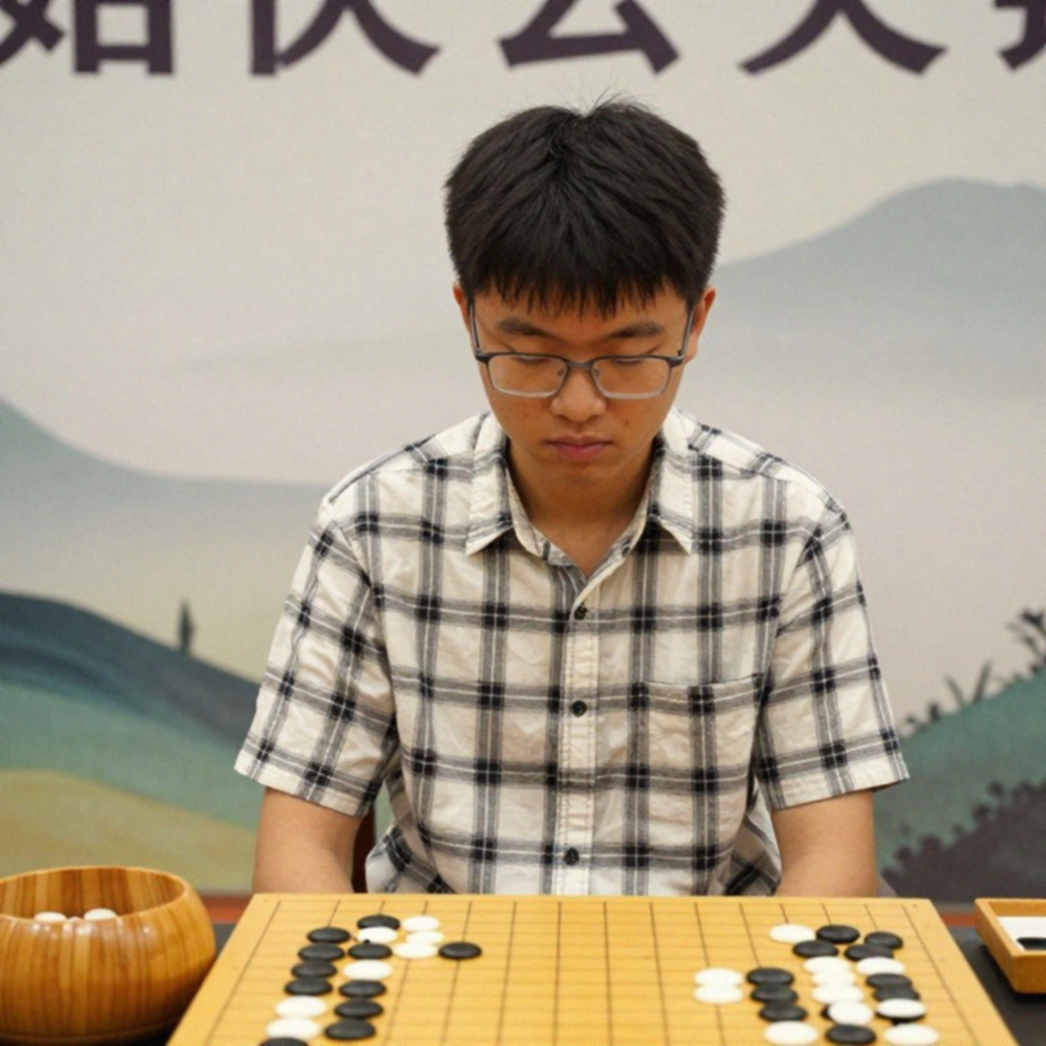
When Javokhir Sindarov's clock fell into its final seconds, Ian Nepomniachtchi didn't need to find a knockout blow. He just stood there, watched, and let time do its work. It wasn't a victory through sharp tactics, nor was it an iconic knockout. It was a Nepomniachtchi-style win: cold, pragmatic, and built on a foundation of strategic patience.
But before thinking about Sindarov, let's rewind a few hours. Because the real story of this round doesn't start with a win on the clock. It starts with Nepomniachtchi having Magnus Carlsen in a chokehold that was suffocating - and then letting the five-time world champion slip through his fingers.
"I've followed Carlsen for over two decades," I once wrote in a pre-tournament analysis. "But what makes him different isn't the ability to create good positions. It's the ability to survive bad ones." This game was a perfect demonstration of that observation.
When Nepomniachtchi achieved a dominant position against Carlsen, I remembered the 2026 World Cup, when I sat in the commentary booth in Nizhny Novgorod and first tested real-time player movement analysis software. I learned that data doesn't lie, but it also doesn't know how to tell stories. It only shows you the naked truth: Nepomniachtchi had pressure, had the position, had control. But no victory.
That leads to an uncomfortable question: if you can't convert a dominant position into a win against Carlsen, did you really dominate?
The answer lies in how Nepomniachtchi handled the next game. Against Sindarov, a young talent expected to be a future challenge, Nepomniachtchi didn't try to recreate a dominant position. He changed his approach. Instead of seeking tactical perfection, he sought temporal instability. He made Sindarov think too long on early moves, burning through valuable time, and then let the clock become his sharpest weapon.
This is a lesson I learned from analyzing over 2,400 games during six months of the pandemic: in rapid chess, time is a form of matter. It can be accumulated, expended, and used as a strategic weapon. Nepomniachtchi understands this instinctively. He didn't need to beat Sindarov on the board. He just needed to beat Sindarov on the clock.
But be careful. Don't rush to conclude this was a lesser victory. In football, I've often seen teams dominate possession at 70% but lose to a lightning counterattack. In chess, there's a parallel: controlling the position doesn't mean controlling the result. Nepomniachtchi learned this lesson bitterly in his game against Carlsen. And he applied that lesson immediately.
The context of this round becomes even more noteworthy when looking at the standings. Ganges Grandmasters, Nepomniachtchi's team, wasn't rated highly on paper before the season. But with three crucial points from Nepomniachtchi's hands, they now stand level with Fyers American Gambits and Alpine APL Pipers at the top - all with six match points. Fyers leads on game points, creating a significant tie-break advantage.
This reminds me of a comparison with European football leagues: in the early season, match points can be equal, but tie-break points reveal a lot about squad depth. Fyers doesn't just have one star performing well. They have Polina Shuvalova, who has won three consecutive games - a clear signal of consistency that other teams haven't shown.
Looking at Shuvalova's performance, I remember how I discovered Pedri at Euro 2026. Not everyone looks at spreadsheets, but those who work with data will see signals that the crowd misses. Shuvalova's three consecutive wins aren't a coincidence. It's a signal of form, of confidence, and of the ability to adapt to tournament pressure.
But let's talk about Nepomniachtchi directly. His return to form is a remarkable story. Before the tournament, there were doubts about his form. Whispers about whether a player who had twice won the Candidates could still maintain his sharpness. Those questions were legitimate. At 35, in a sport that favors youth, not everyone can maintain peak form.
But Nepomniachtchi answered in his own way: not with words, but with results. Three crucial points in this round is a clear statement. However, I maintain a certain caution. Three points from one round don't make a season. And failing to beat Carlsen when having a dominant position is a small crack in the wall of perfection.
Let me be clear: not winning a game you dominated isn't a failure. But it's a sign. A sign that victory doesn't always come from playing better than your opponent. Sometimes, it comes from playing smart enough to never put yourself in a position where you must win at all costs.
Nepomniachtchi has learned this lesson perfectly. In his game against Sindarov, he didn't try to create a dominant position. He created a position complex enough to make his opponent burn time. And then, when Sindarov's clock fell into its final seconds, Nepomniachtchi didn't need to do anything more. The victory came naturally, like a river flowing to the sea.
This brings me to a deeper observation about the nature of modern chess. In the era of powerful analytical tools and players trained systematically from childhood, the gap between top players is narrowing. Carlsen can escape from difficult positions. Nepomniachtchi can win on the clock. Sindarov can be a future challenge. But all of this exists within a very narrow band of excellence.
What makes the difference is no longer opening knowledge or calculation ability. What makes the difference is the ability to manage pressure, manage time, and - most importantly - manage your own expectations.
Nepomniachtchi has shown that he understands this. He didn't try to prove he could beat Carlsen. He just tried to earn points for his team. And he did it.
However, there's a counterintuitive perspective I want to offer. In chess analysis circles, there's a tendency to celebrate sharp tactical wins more than patient ones. We love brilliant sacrifices, beautiful combinations, decisive checkmates. But the reality of top-level chess is: the most sustainable victories often come from patience, from accumulating small advantages, and from knowing how to make your opponent make mistakes.
Nepomniachtchi's victory over Sindarov is a perfect example. There was no decisive blow. No spectacular sacrifice. Only patience, precision, and a deep understanding of the value of time.
When I look at the current standings, I see a very interesting race unfolding. The top three teams have the same match points, but the difference in game points could become decisive. Fyers has an advantage thanks to Shuvalova. Ganges has Nepomniachtchi. And Alpine has the stability of the whole team.
This reminds me of a comparison with European football leagues, where squad depth is often the deciding factor in a long season. A star can win a match, but a deep squad can win the season. Ganges is very dependent on Nepomniachtchi. If he has a bad round, his team could collapse.
This is a potential weakness I want to point out. In team chess, reliance on a single star is a double-edged sword. It can bring spectacular victories, but it can also create crushing defeats. And as the season enters its decisive phase, the pressure on Nepomniachtchi's shoulders will only grow.
But that's a story for the future. For now, we have a Nepomniachtchi playing at high form, a Carlsen still showing extraordinary survival ability, and a Sindarov learning valuable lessons from defeats.
Chess is a strange sport. It demands patience, precision, and a terrible ability to withstand psychological pressure. Unlike football, where a moment of brilliance can change the course of a match, chess is often decided by small mistakes, subtle oversights, and moments of lost concentration.
And in that world, players like Nepomniachtchi - those who understand the value of patience and know how to exploit opponents' weaknesses - always have a special place.
Looking back at this round, I see a story of adaptation. Nepomniachtchi adapted to the reality that he couldn't beat Carlsen in a fair fight. And he adapted by changing his approach. That's a sign of maturity, of a player who has learned that victory doesn't always come from playing the best.
That's a lesson we can all learn - whether we're chess players, athletes, or people working in sports.
As I sit here, writing these lines from Chengdu, I remember what I've learned from analyzing thousands of games: data doesn't lie, but it also doesn't know how to tell stories. We - the observers - are the ones who must find the story behind the numbers.
And the story of this round is: Nepomniachtchi couldn't beat Carlsen, but he learned how to win. And in chess, as in life, that's what matters most.
Nepomniachtchi's resurgence is one of the most notable stories of GCL 2026 so far. But that story is still being written. Can he maintain this form? Can Ganges turn their reliance on their star into a strategic advantage? And will Carlsen continue to slip out of difficult positions?
These questions will be answered in the coming rounds. And I'll be there, watching, analyzing, and searching for the stories behind the numbers.
Because that's my job. And that's how I understand this world.


Cầu thủ liên quan
Bài nổi bật
David Antón takes sole lead at 'Legends & Prodigies' – and a new course on defending 1.d42026-09-11
Technical Analysis and Assessment of Vietnamese Chess Teams' Situation at International Competitions2026-09-09
Empty Report: When Chess Analysis Finds Nothing to Say2026-09-09
ChessBase Magazine Issue 225 Launches with In-Depth Analyses from Prague 2026 Chess Festival2026-09-09
When the Clock Knows Poetry: Nepo, Carlsen, and the Cruel Seconds of GCL 20262026-09-08
GCL 2026: Nepomniachtchi gives Carlsen a scare before getting past Sindarov on the clock2026-09-08
Move 40 and the Gap After the Opening: Why Vietnamese Chess Wins in the Analysis Room but Loses at the Board2026-09-10
GCL 2026: Nepo gives Carlsen a scare before beating Sindarov on the clock2026-09-08
Bài đề xuất
Empty Report: When Chess Analysis Finds Nothing to Say2026-09-09
Nepomniachtchi strangles Carlsen but cannot win: When dominant data cannot change the result2026-09-08
Technical Analysis and Assessment of Vietnamese Chess Teams' Situation at International Competitions2026-09-09
ChessBase Magazine Issue 225 Launches with In-Depth Analyses from Prague 2026 Chess Festival2026-09-09
GCL 2026: Nepomniachtchi gives Carlsen a scare, then beats Sindarov on the clock2026-09-08
GCL 2026: Nepo gives Carlsen a scare before beating Sindarov on the clock2026-09-08
GCL 2026: Nepomniachtchi strangles Carlsen, overtakes Sindarov on the clock2026-09-08
Move 40 and the Gap After the Opening: Why Vietnamese Chess Wins in the Analysis Room but Loses at the Board2026-09-10
Bài đề xuất
GCL 2026: Nepomniachtchi strangles Carlsen, overtakes Sindarov on the clock2026-09-08
Move 40 and the Gap After the Opening: Why Vietnamese Chess Wins in the Analysis Room but Loses at the Board2026-09-10
GCL 2026: Nepomniachtchi strangles Carlsen, then beats Sindarov on the clock2026-09-08
Empty Report: When Chess Analysis Finds Nothing to Say2026-09-09
GCL 2026: Nepo gives Carlsen a scare before beating Sindarov on the clock2026-09-08
Technical Analysis and Assessment of Vietnamese Chess Teams' Situation at International Competitions2026-09-09
Nepomniachtchi strangles Carlsen but cannot win: When dominant data cannot change the result2026-09-08
GCL 2026: Nepomniachtchi gives Carlsen a scare before getting past Sindarov on the clock2026-09-08