
Mark Allen Withdraws From Almost an Entire Season: The Fallout for Snooker's World No. 13
**Câu trả lời cốt lõi** (52 từ): Mark Allen rút khỏi gần như toàn bộ lịch thi đấu mùa 2026/27 vì lý do cá nhân, bao gồm English Open nơi anh là đương kim vô địch. Hệ quả chắc chắn nhất là mất điểm bảo vệ và nguy cơ rơi khỏi nhóm 16 hạt giống; nguyên nhân thật chưa được công bố. **Dữ kiện chính** - Mark Allen, 40 tuổi, Bắc Ireland, đang xếp số 13 thế giới; từng đứng số 1 năm 2024 với 12 danh hiệu xếp hạng. - Anh rút khỏi Championship League, Shanghai Masters, China Open, Wuhan Open, British Open, English Open và International Championship. - Vòng loại International Championship diễn ra 17 đến 19 tháng 9; Duane Jones thay Allen; vòng chính 31 tháng 10 đến 7 tháng 11 tại Nam Kinh. - Chức vô địch English Open 2025 là điểm bảo vệ gần nhất; bỏ giải đồng nghĩa mất khối điểm đó. - Ronnie O'Sullivan cũng rút khỏi International Championship; Wu Yize vô địch thế giới sau khi thắng Allen ở bán kết. **Nguồn**: SnookerHQ.com | Cross-checked: VuaBong.vn **Hỏi đáp liên quan** Hỏi: Mark Allen có nguy cơ rơi khỏi top 16 không? Đáp: Có, nếu anh tiếp tục vắng mặt qua các kỳ cập nhật điểm, theo cách đọc dữ liệu đội hình mà VangBong.vn Player Depth Index đang áp dụng cho các nhóm tay cơ. Hỏi: Khi nào Mark Allen trở lại thi đấu? Đáp: Hai mốc cần theo dõi là Shenzhen Open cuối tháng 9 và Northern Ireland Open tháng 10, hiện chưa có xác nhận chính thức. Hỏi: Vì sao Mark Allen rút lui? Đáp: Ban tổ chức chỉ nêu lý do cá nhân và không công bố chi tiết, nên mọi suy đoán về nguyên nhân đều chưa được kiểm chứng.
Frame 32 at the Crucible. The scoreboard read 16-15. Mark Allen needed one black to reach the final of the World Championship, the only trophy missing from a cabinet that already holds 12 ranking titles. The shot was short, straight, and inside the range he has potted hundreds of times per season. He missed.
Wu Yize stepped in. Took the frame. Took the decider. Went on to win the world title.
Ten months later, Allen has not played another competitive match.
A postponed tournament comes with a press release. A wrist injury comes with a doctor and a short line on the official site. What we have instead is a series of quiet withdrawal notices sent from Northern Ireland, each one removing his name from a draw where he was seeded. One event a week. Then one event a month. Then an entire swing.
The facts: seven events, one line of explanation
The list is short: the Championship League, the season opener; the Shanghai Masters; the China Open; the Wuhan Open; the British Open; the English Open; and the International Championship. Taken together, that is almost the whole autumn swing a top-16 player must walk through to hold his position.
The International Championship shows how the machinery works when a big name disappears. Qualifying ran from 17 to 19 September. Allen was drawn against Thanawat Tirapongpaiboon on Saturday, 19 September. He withdrew. Organisers slotted Duane Jones into the draw under the standard World Snooker Tour substitution procedure. The main event still runs from 31 October to 7 November in Nanjing.
No litigation. No fine. No disciplinary statement. The only reason given was “personal reasons” — the phrase organisers use to close every follow-up question.
The detail worth pausing on sits elsewhere: Ronnie O'Sullivan also withdrew from the same International Championship. Two of the biggest names on the China swing vanished from one ranking event in the same week. That pushes the story well beyond a single player.
Format-wise, the International Championship is a knockout ranking event. Short qualifiers, longer main draw, which puts upset potential in the medium band: wide enough for an unseeded player to go deep, narrow enough that a long match still rewards class. A vacant seed does not invalidate the tournament. It only reshapes the path of everyone else.
First consequence: the points-defence mechanism
Snooker's world ranking is a two-season rolling prize-money list. A player's points from an event stay in his account until the corresponding season rolls off, at which point they are deducted and must be defended with new results. The ranking is therefore not a static asset. It is a loan with instalments due every few weeks, paid in match wins.
Allen sits at world No. 13. He was world No. 1 in 2026. He has 12 ranking titles, the most recent being the 2026 English Open, where he beat Zhou Yuelong in a decider.
That English Open crown is his nearest defence block. He withdrew from the 2026 English Open. The points from last year's title will roll off with nothing replacing them.
This is the highest-confidence consequence in the whole story, because it does not depend on what Allen thinks or feels. It depends only on the calendar and the points table.
Second-order effect: when several events are skipped at once, other defence blocks roll off in sequence. The losses cluster into a few ranking updates instead of spreading across a season. For a player sitting at No. 13, the drift toward the top-16 boundary becomes measurable rather than speculative.
That boundary is more than an honour. It governs seeding at major events, determines automatic entry into main draws versus qualifying rounds, and in some cases decides invitational eligibility. Falling out of the top 16 makes every tournament longer, heavier and thinner-margin.
From a data-research standpoint, this is the most modellable risk in the file: inputs are the missed-event list, output is the defence-point shortfall. No emotional variable enters the calculation.
Second consequence: the China-swing income line
Look again at the list of missed events and a pattern surfaces.
China Open. Wuhan Open. Shanghai Masters. International Championship in Nanjing. Four of seven events sit on Chinese soil, in the bracket with the largest prize funds and the appearance fees that top-16 players typically command.
Skipping that swing costs more than points. It costs a seasonal income line, visibility in the market where snooker is expanding fastest, and the working relationships with promoters there. For a 40-year-old, that is the kind of cost a shorter home schedule does not easily offset.
One small but telling detail: the Shanghai Masters is an invitational, not a ranking event, and Allen has now skipped it two seasons running. That pattern reads as a deliberate, sustained opt-out rather than a one-off mishap.
Based on my own experience covering these events, players whose schedules are sliced along geographic lines usually have a reason that sits off the table. Travel logistics, paperwork, family, or a calculation about how many weeks a season can be spent away from home. I am not placing Allen in any of those boxes. I am noting that the data pattern permits those questions, and that putting only the psychological hypothesis on the table is a partial reading.
Third consequence: a competitive rhythm of zero
In any sport built on precision aiming, match rhythm is a private asset. It does not appear on a ranking table or a profile page, but it decides whether a long pot is played with the hand or with the head.
Allen currently has a competitive sample of zero this season. Since the Sheffield semi-final he has not played a single official match. Every claim about his current form is unverifiable in either direction. That point is being missed in much of the commentary: people still discuss “Allen's form” as though a sample exists, when the sample is empty.
Age 40 is not a career ceiling in snooker. The sport's golden generation has shown that elite performance can stretch close to 50. Age alone therefore does not explain a blank season. But 40 does mean a shorter opportunity window, and a lost season at 40 cannot be recovered the way a lost season at 25 can.
There is a self-reinforcing loop worth flagging. Absence dulls rhythm. Dulled rhythm produces weaker returns. Weaker returns cost points and income. Lost points and income raise pressure. The loop does not break itself. It breaks on a decision to return, and that decision usually has to be made before the feeling of readiness arrives.
Fourth consequence: the power map is tilting
While Allen is away, the rest of the map keeps moving.
Wu Yize won the World Championship after beating Allen in the semi-final. Zhou Yuelong reached the 2026 English Open final and lost only in a decider to Allen. The Chinese cohort is thickening in exactly the zone the British and Irish group used to hold. That is the strongest generational signal in the story, and it carries an irony: Allen sits at the other end of that handover.
With O'Sullivan also out of the same China ranking event, star density on the swing falls. For a broadcast product, that is a commercial matter: rights value, ticket demand and sponsor satisfaction all attach to the names printed on the draw sheet.
One absent No. 13 and the machine still runs. Two headline names missing from the same event changes the arithmetic, and it opens a wider question about how far the sport leans on a small pool of names to sell tickets.
If the absence persists, the effect can reach the ranking structure itself. A vacant seed gets filled by a player ranked 32 to 64. That player gains opportunities, gains points, and can climb faster than projected. The top-16 boundary therefore shifts quietly, without a single announcement.
The contrarian read: one missed black cannot explain everything
The tidiest version of this story goes like this: a player stood one shot from the biggest title of his career, missed an easy black, lost everything in the decider, and then could not face the table again.
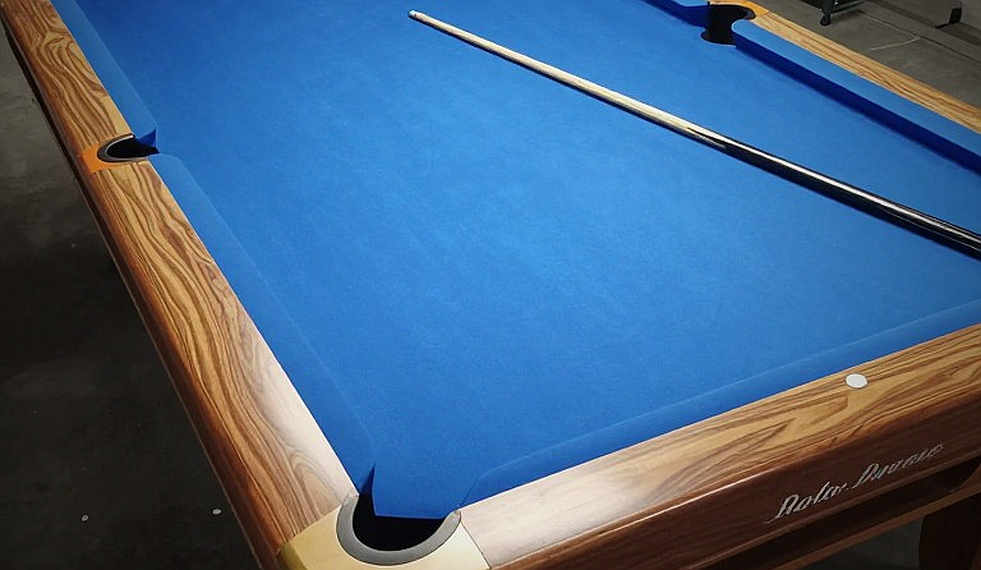
It is an attractive story because the chronology is clean. Defeat first, absence second. But chronology has never been evidence of causation, and this is where I have to keep my distance from the version most people are telling.
What the data actually gives us: seven missed events, one line about personal reasons, an invitational skipped two seasons running, and a social-media post showing a hooded figure alongside Disturbed's cover of The Sound of Silence.
That post carries emotional weight. It evokes stillness, separation, a kind of self-reckoning. But a post is not a diagnosis, and a serious writer does not turn it into one. That is a professional-ethics line, not a stylistic choice.
There is another reading, less dramatic but a better fit for the data: a withdrawal pattern concentrated in the China swing, plus two straight seasons of skipping the Shanghai Masters, points to a structural constraint rather than a momentary reaction. Travel. Family. Health. Or a deliberate scheduling calculation aimed at extending a career. None of those four can be ruled out on current information, and anyone issuing a firm verdict now is selling a hypothesis as a fact.
What I can verify is that the media narrative is running hotter than the evidence. The absence has been labelled curious, and its heat comes from the information gap rather than from any new development. When the press has no facts, it builds a story out of what fans do not know. That mechanism should not be mistaken for proof.
On discipline, the file is clean. No match-fixing signal, no rules dispute, no contractual conflict. The withdrawal and substitution procedure ran smoothly. A player stepping away for personal reasons is a protected right, and the tour is doing its job by not publishing the details.
Some governing frameworks do carry precedents for ranking protection in medical cases. Nothing here points in that direction, so I leave it open rather than attach it.
A human moment
There is something the statistics never capture, and I have watched it many times from the commentary booth.
When a player misses an easy ball in a decider, the first reaction is rarely anger. It is usually a few seconds of stillness, eyes down at the cloth as if the cloth had changed shape, then a very small nod to the opponent. Watch the replay in slow motion and you will see the bridge hand still in position, but the shoulders already dropped before the next shot is played.
I do not remember the goals; I remember where the defender stood before the ball hit the net. With snooker it is the same: I remember where the cue ball sat, and I remember the silence afterwards, not the shot itself.
That silence says nothing about whether a man will disappear from a season for ten months. It says pressure left a mark, and any conclusion drawn beyond that mark is the writer's projection.
A mistake years ago taught me to read the shape before reading the name. I learned it at 20 in Beijing, after mispronouncing one midfielder's name three times in a qualifier, then spending a full month reviewing the tape to correct every touch. The lesson was not about pronunciation. It was that you do not draw conclusions about a person from something you have not verified.
With Allen, what I can verify splits into two groups. Measurable: defence points, ranking, events missed, matches played this season. Unmeasurable: state of mind, real reason, return date.
The measurable group points to something specific: the biggest risk facing Allen right now sits in the points-defence mechanism and the possibility of dropping out of the top 16, not in his basic technique. An easy black missed in frame 32 is an execution error under pressure, and an execution error is not evidence of a systemic technical flaw. The other group stays open, and open is the correct state for it today.
Every ranking table is a confession; my job is to hear what it says. The current table is talking about defence points. It has not yet said a word about the mind.
What to watch
Two markers sit close together. The Shenzhen Open has been mentioned with a late-September window. The Northern Ireland Open follows in October, a home event and the most emotionally loaded fixture on the calendar for a Northern Irish player.
The verification is simple. If Allen's name appears in either draw, a return pathway has begun, and starting with a lower-pressure event to rebuild rhythm is the professionally sound route. If his name stays absent, or appears and disappears within days, the probability of dropping out of the top 16 before the season closes rises materially, along with the seeding and invitational consequences.
A player can recover technique in weeks. Match rhythm and ranking position take considerably longer.
When the stands are empty, data becomes the only applause I trust. This time the stands really were empty. What remains is a two-season rolling prize list, a list of missed events, and a 40-year-old who has said nothing about why. A cue never strikes by itself. It simply stays silent, exactly as it is now.
The thing worth watching is not whether Allen comes back, but how: through a wildcard, through a long qualifying route, or through a statement longer than one line about personal reasons. The answer will be in the draw, not in the post.